
Artificial Intelligence (AI) is no longer a futuristic concept; it’s the driving force behind modern digital marketing. From personalized recommendations to automated campaigns, AI is reshaping how businesses connect with their audiences.
In 2026, companies that leverage AI are gaining a significant competitive advantage by delivering smarter, faster, and more personalized experiences. Whether you’re a beginner or an experienced marketer, understanding the role of AI in digital marketing is essential for staying relevant.
In this guide, you’ll discover how AI works in marketing, its key benefits, tools, challenges, and how you can implement it effectively.
What is AI in Digital Marketing?
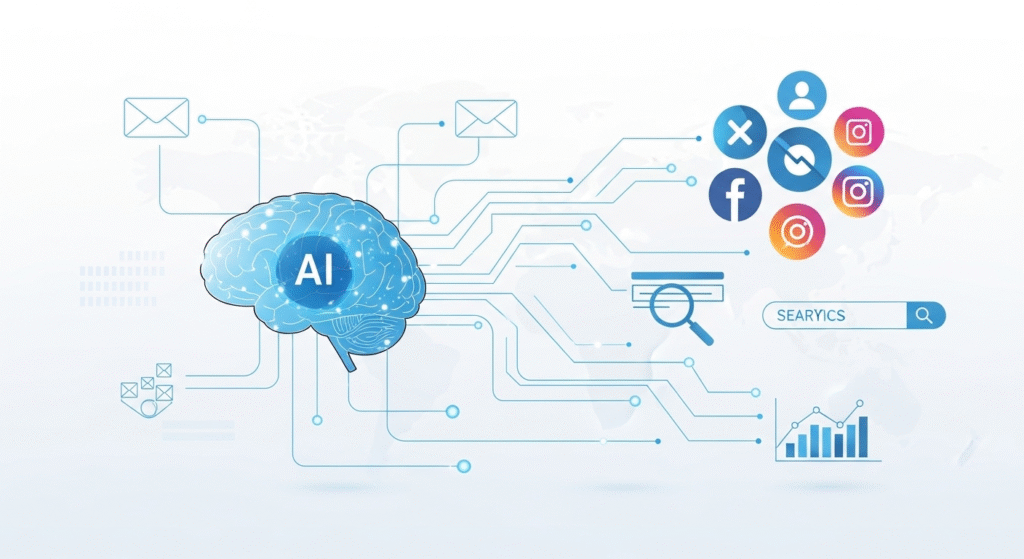
AI in digital marketing refers to the use of intelligent technologies that analyze data, predict behavior, and automate decision-making processes to improve marketing performance.
Core AI Technologies Used in Marketing
- Machine Learning (ML): Learns from data to improve campaigns over time
- Natural Language Processing (NLP): Helps machines understand and generate human language
- Predictive Analytics: Forecasts customer behavior and trends
AI in marketing means using smart software to understand customers and automatically improve marketing results.
How AI is Transforming Digital Marketing

Personalized Customer Experiences
AI enables brands to deliver highly personalized experiences by analyzing user behavior, preferences, and interactions.
- Product recommendations based on browsing history
- Personalized email campaigns
- Dynamic website content
Result: Higher engagement and conversions
AI in Content Creation
AI tools can now generate blog posts, social media captions, and even video scripts.
- Automated writing tools
- SEO optimization suggestions
- Content performance analysis
Benefit: Faster content production with better optimization
Chatbots and Customer Support
AI-powered chatbots provide instant support and improve customer satisfaction.
- 24/7 availability
- Instant responses
- Conversational interactions
Outcome: Reduced workload and improved user experience
Predictive Analytics and Data Insights
AI analyzes large datasets to predict future customer actions.
- Identify buying patterns
- Optimize marketing campaigns
- Forecast trends
Result: Smarter decision-making
AI in SEO and Search Optimization
AI is transforming how SEO works by focusing on user intent rather than just keywords.
- Automated keyword research
- Search intent analysis
- Voice search optimization
Outcome: Better rankings and visibility
Key Benefits of AI in Digital Marketing
- Increased Efficiency: Automates repetitive tasks
- Better Targeting: Reaches the right audience at the right time
- Higher ROI: Improves campaign performance
- Enhanced Customer Experience: Personalized interactions
- Scalability: Handles large-scale operations easily
Popular AI Tools Used in Digital Marketing
- Content generation tools (AI writers)
- Chatbot platforms
- Email marketing automation tools
- Analytics and data platforms
- Ad optimization tools
These tools help businesses streamline operations and improve results.
Challenges of Using AI in Marketing
While AI offers many benefits, it also comes with challenges:
- Data Privacy Concerns
- High Initial Costs
- Learning Curve for Teams
- Over-reliance on Automation
Businesses must balance AI with human creativity.
Future Trends of AI in Digital Marketing (2026 and Beyond)

AI is evolving rapidly, and the future looks promising:
- Hyper-Personalization: Tailored experiences at scale
- Voice Search Growth: More users are relying on voice assistants
- AI-Generated Video Content
- Predictive Customer Journeys
- Human + AI Collaboration
Businesses that adapt early will dominate the market.
How to Implement AI in Your Marketing Strategy
Step-by-Step Guide
- Define your marketing goals
- Identify areas where AI can help
- Choose the right AI tools
- Integrate AI into your workflow
- Monitor and optimize performance
Start small and scale gradually for the best results.
Voice Search Optimization (VSO) with AI
Voice search is changing how users interact with search engines.
Key Strategies:
- Use conversational keywords
- Answer questions directly
- Optimize for featured snippets
- Include FAQ sections
Example query:
“What is the role of AI in digital marketing?”
Conclusion
AI is revolutionizing digital marketing by making it smarter, faster, and more effective. From personalization to predictive analytics, its impact is undeniable.
Businesses that embrace AI today will be better positioned to succeed in the future. However, the key lies in balancing automation with human creativity to deliver authentic and engaging experiences.
FAQs
What is AI in digital marketing?
AI in digital marketing refers to using intelligent tools to analyze data, automate tasks, and improve marketing performance.
How does AI improve marketing performance?
AI improves targeting, personalization, and decision-making, leading to better results and higher ROI.
Is AI replacing digital marketers?
No, AI supports marketers by automating tasks, but human creativity and strategy remain essential.
What tools use AI in marketing?
AI tools include content generators, chatbots, analytics platforms, and ad optimization software.
How can beginners start with AI in marketing?
Start by using simple AI tools like chatbots or content generators and gradually expand.