
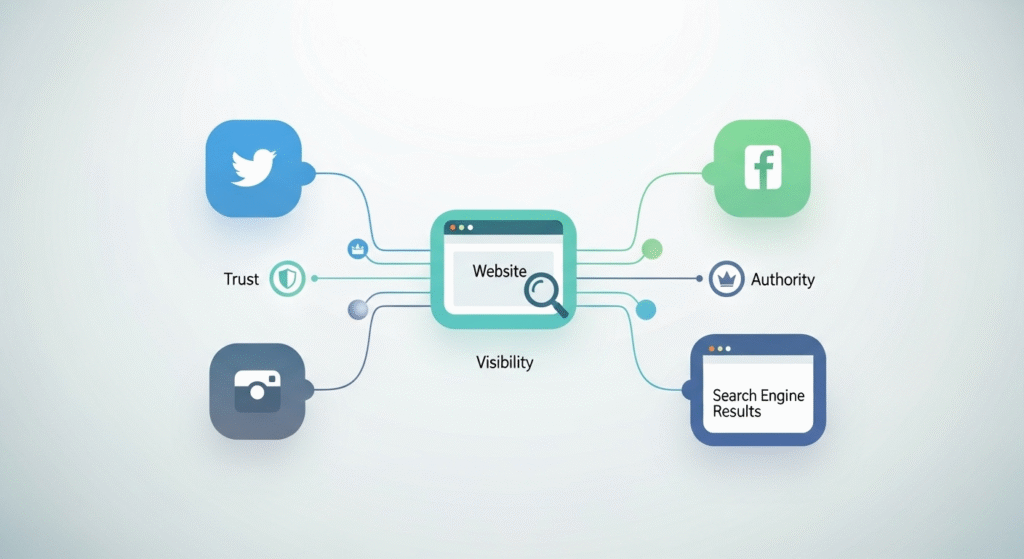
Social media does not directly change Google rankings, but it plays a powerful supporting role in SEO. When used strategically, it increases content visibility, accelerates indexing, drives qualified traffic, strengthens brand searches, and leads to natural backlinks—all of which influence how well your site performs in search over time.
How Social Media Supports SEO?
- Social platforms amplify your content so it actually gets seen
- More visibility leads to organic backlinks and brand mentions
- Repeated exposure increases branded searches, a strong trust signal
- Social traffic helps Google discover and index new pages faster
- Engagement insights improve content relevance and intent matching
Why Social Media and SEO Are Connected (Even If Google Says “Indirect”)
I have seen this pattern repeatedly across different industries.
A business invests in solid SEO fundamentals: keyword research, on-page optimization, internal linking, and clean site structure. The content is good. Sometimes it is even excellent. But rankings stall.
Then the same content starts getting distributed consistently on social media, especially where the target audience already spends time. Within weeks, things change. Pages get indexed faster. Backlinks start appearing naturally. Branded searches increase. Rankings move.
This happens because SEO today is not just about optimizing pages. It is about proving relevance, usefulness, and trust at scale. Social media is one of the most effective ways to create those signals.
Does Social Media Directly Affect Google Rankings?
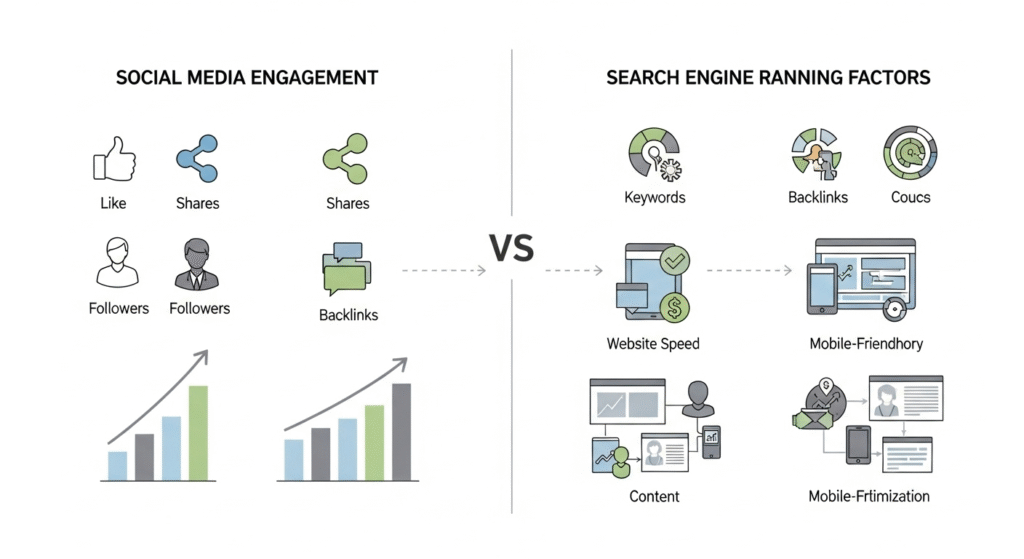
Short answer: No, social signals like likes or shares are not direct ranking factors.
Practical reality: Social media influences almost every ranking signal that matters.
Here is what actually happens:
- Social posts expose your content to people who can link to it
- Those visitors engage, return, and search for your brand later
- Google sees stronger behavioral and brand signals
- Authority grows naturally without aggressive link building
Google may not count a Facebook share as a ranking factor, but it absolutely counts what happens after people click.
How Social Media Improves Content Discovery and Indexing
One of the most overlooked benefits of social media is how it helps Google discover your content.
When a new page is published and shared on platforms like LinkedIn or X, several things occur:
- Googlebot encounters the URL through frequent crawls of popular platforms
- Users click and interact, sending early engagement signals
- The page is indexed faster, sometimes within hours instead of days
For newer sites or blogs with limited crawl budget, this alone can be a major advantage.
Social Media, Brand Searches, and Trust Signals
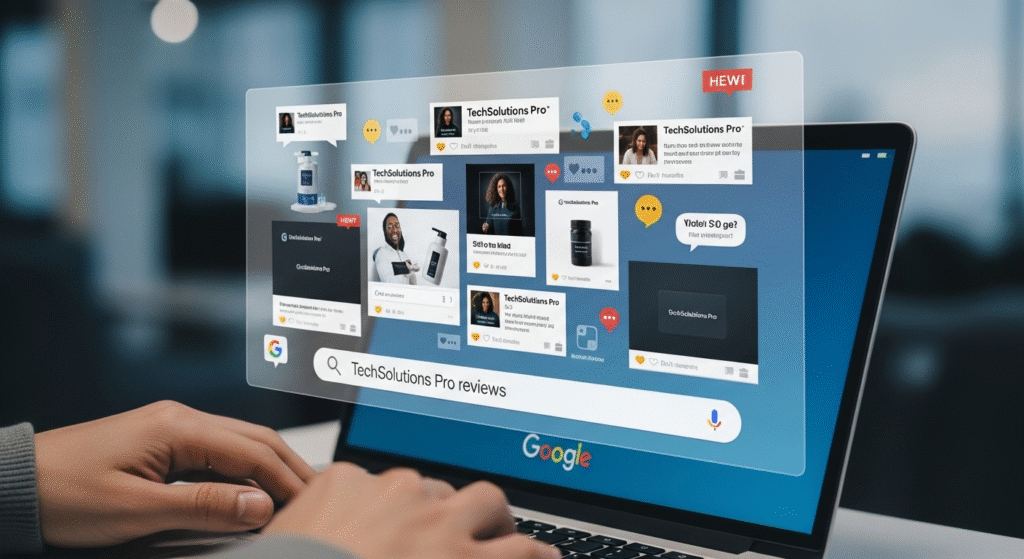
Brand searches are one of the strongest indicators of authority and trust.
When people see your content repeatedly on social platforms, they begin to recognize your name. Later, instead of searching for a generic keyword, they search:
- Your brand name
- Your brand plus a service
- Your brand plus a question
These searches tell Google that users are intentionally looking for you, not just stumbling across your site. Over time, this strengthens your overall domain trust.
Social media is often the trigger that turns a casual reader into a branded searcher.
Which Social Media Platforms Help SEO the Most?
The best platform depends on your audience and business model, but some patterns are consistent.
LinkedIn for B2B and Authority Building
LinkedIn content often reaches decision-makers, journalists, and industry peers. Long-form posts, carousels, and thought leadership content tend to perform well. Posts frequently get indexed and can drive sustained referral traffic.
Facebook for Local and Community-Based Businesses
Facebook works well for local visibility, repeat engagement, and community trust. Groups, comments, and shares keep content circulating longer than many people expect, especially for service-based businesses.
Instagram for Brand Recall and Demand Creation
Instagram does not pass links directly in most cases, but it is powerful for brand awareness. That awareness leads to later searches on Google, which supports SEO indirectly.
YouTube as a Search Engine Amplifier
YouTube is owned by Google, and videos frequently appear directly in search results. Optimized titles, descriptions, and links in video descriptions can drive long-term organic traffic to your site.
The key is focus. Dominating one platform that matches your audience is far more effective than spreading effort thin across many.
How to Share Content on Social Media in an SEO-Friendly Way
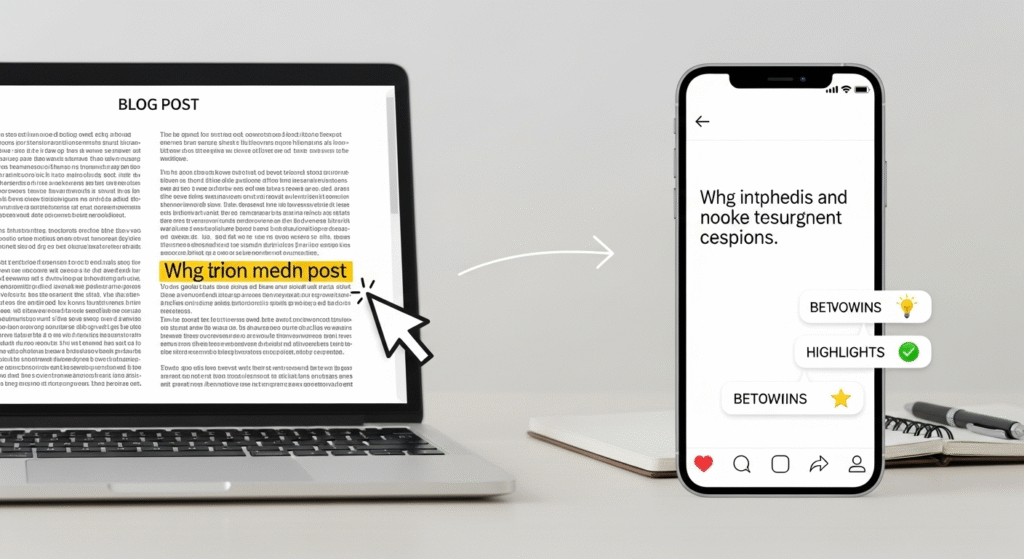
Most businesses treat social sharing as an afterthought. They post a link, add a generic caption, and move on. That approach rarely works.
A more effective framework looks like this:
First, extract one clear insight from your content. This could be a strong opinion, a surprising takeaway, or a practical lesson.
Second, add context. Explain why it matters, what problem it solves, or what mistake you see people making.
Third, include the link as an optional next step, not the main focus. The post itself should deliver value even if no one clicks.
This approach increases engagement, keeps posts visible longer, and drives higher-quality traffic when clicks do happen.
Social Engagement and Behavioral SEO Signals
Google does not read likes or comments, but it does analyze how users behave after arriving on your site.
Social media contributes by:
- Sending visitors who are already primed for the topic
- Increasing time on page and scroll depth
- Reducing bounce rates when content matches expectations
- Encouraging repeat visits through brand familiarity
These behavioral patterns help Google determine whether your page actually satisfies user intent.
How Social Profiles Themselves Rank in Search Results
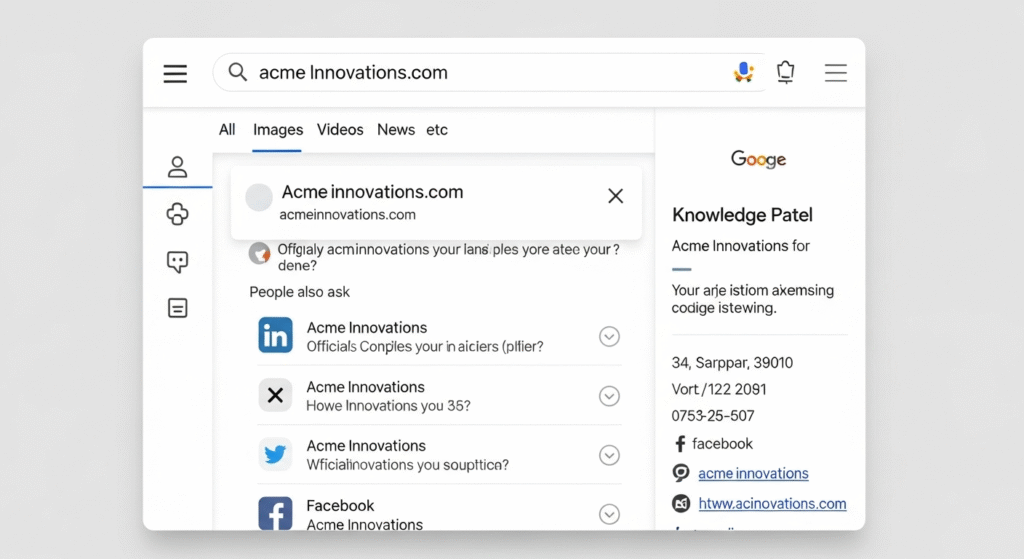
Your social profiles are often SEO assets on their own.
For branded searches, it is common to see:
- LinkedIn company pages
- Facebook business pages
- YouTube channels
ranking on page one. This pushes competitors further down and increases trust by dominating more real estate in the search results.
Optimizing these profiles with consistent branding, clear descriptions, and accurate business information is an underrated SEO tactic.
Content Types That Perform Best for SEO Through Social Media
Not all content performs equally when shared. The following formats tend to produce the strongest SEO impact:
| Content Type | SEO Benefit |
|---|---|
| In-depth blog posts | Link acquisition and authority |
| Guides and checklists | Saves, shares, and citations |
| Case studies | Trust and conversion support |
| Short-form videos | Brand recall and demand creation |
| Data-driven posts | Natural references and backlinks |
If content is genuinely useful and specific, social media gives it the reach it needs to influence SEO.
Posting Frequency and Consistency for SEO Support
There is no fixed posting schedule that guarantees SEO gains. What matters is consistency and quality.
A realistic baseline for most businesses:
- Two to three high-quality posts per week
- Monthly resharing of evergreen content
- Repurposing top-performing posts into new formats
Search engines reward steady signals over time, not bursts of activity followed by silence.
Measuring the SEO Impact of Social Media
To understand whether social media is helping your SEO, track indicators rather than vanity metrics.
Key metrics to monitor:
- Growth in branded searches via Google Search Console
- Referral traffic from social platforms
- Indexing speed of newly published pages
- Backlinks earned after social promotion
When social media is supporting SEO effectively, these metrics move together.
Common Myths About Social Media and SEO
One common misconception is that social links pass ranking authority. They do not, but they often lead to links that do.
Another myth is that you need to be active on every platform. In practice, one strong channel aligned with your audience is enough.
Finally, many believe likes and shares alone improve rankings. What actually matters is how social exposure changes user behavior and brand perception.
People Also Ask: Social Media and SEO
Does social media directly affect Google rankings?
Social media does not directly change rankings, but it strongly influences traffic, brand searches, backlinks, and engagement signals that Google uses to evaluate quality.
Which social media platform is best for SEO?
The best platform depends on your audience. LinkedIn works well for B2B, YouTube for search visibility, and Facebook for local businesses.
Can social media help generate backlinks?
Yes. Social media increases content visibility, making it easier for bloggers, journalists, and creators to discover and link to your content naturally.
How often should businesses post on social media for SEO benefits?
Consistency matters more than frequency. Posting two to three times per week with high-quality content is usually sufficient.
Do social profiles appear in Google search results?
Yes. Optimized social profiles often rank on the first page for branded searches, increasing visibility and trust.
What This Means for Your SEO Strategy
SEO without distribution is fragile. Even the best content struggles if no one sees it.
Social media is not a shortcut or a replacement for SEO fundamentals. It is the amplifier that turns good content into visible, trusted, and link-worthy content.
If you are investing in SEO but ignoring social distribution, you are limiting the return on that investment.