
SEO performance is best measured by tracking how visibility turns into qualified traffic, how that traffic engages with your site, and how often it converts into real business outcomes. Rankings alone don’t tell that story. Sustainable SEO measurement combines Search Console data, Analytics behavior metrics, and conversion tracking, evaluated over time rather than in short-term snapshots.
- Rankings indicate positioning, not success
- Impressions signal future growth before traffic appears
- Engagement shows whether content satisfies intent
- Conversions validate ROI from SEO
- Year-over-year trends matter more than daily or weekly changes
Why SEO Measurement Breaks Down for Most Teams
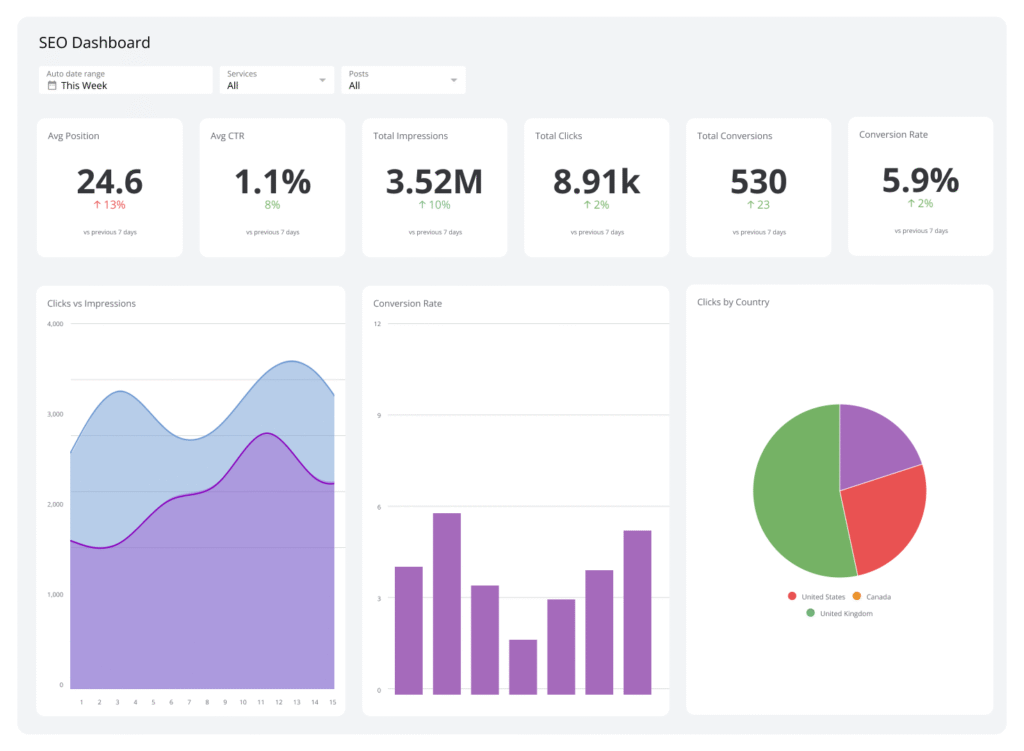
SEO reporting usually breaks when metrics are tracked in isolation. One dashboard shows rankings, another shows traffic, and a third shows conversions, but no one connects the dots.
In practice, SEO performance fluctuates even when nothing “goes wrong.” SERP layouts change, AI answers absorb clicks, competitors improve their snippets, and user behavior shifts. When teams panic over short-term drops without context, they end up chasing symptoms instead of causes.
Effective SEO measurement focuses on patterns, not noise. The goal is to understand whether organic search is becoming more visible, more relevant, and more valuable over time.
What “SEO Performance” Actually Means
SEO performance answers a single core question: Is organic search consistently contributing to business goals?
To answer that honestly, four layers must be measured together:
- Visibility: Are you appearing for relevant searches?
- Traffic: Are users clicking through?
- Engagement: Are they satisfied with what they find?
- Conversions: Are they taking meaningful action?
If any one of these breaks, overall performance suffers—even if rankings look strong.
Visibility KPIs (Can Google See and Surface You?)
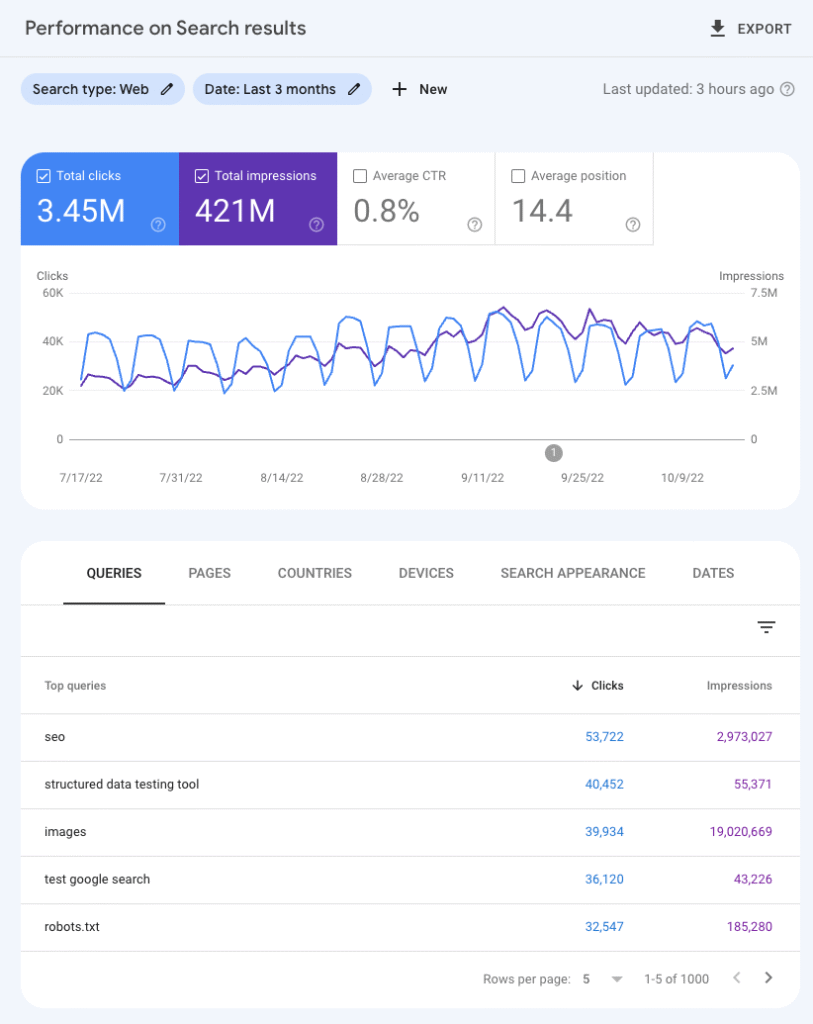
Visibility KPIs show whether Google understands your site and considers it relevant enough to display.
Key visibility metrics include:
- Impressions for queries and pages
- Average position across keyword groups
- Click-through rate (CTR)
- Growth in total ranking queries
These metrics are tracked primarily in Google Search Console.
Impressions are often misunderstood. They don’t represent traffic, but they are one of the strongest early indicators of SEO momentum. A steady rise in impressions usually means new keywords are being indexed and tested. Traffic often follows weeks later.
When impressions rise, but CTR stagnates, the problem is rarely technical SEO. It’s usually a messaging issue: titles, meta descriptions, or competition from SERP features.
Traffic KPIs (Are Users Actually Arriving?)
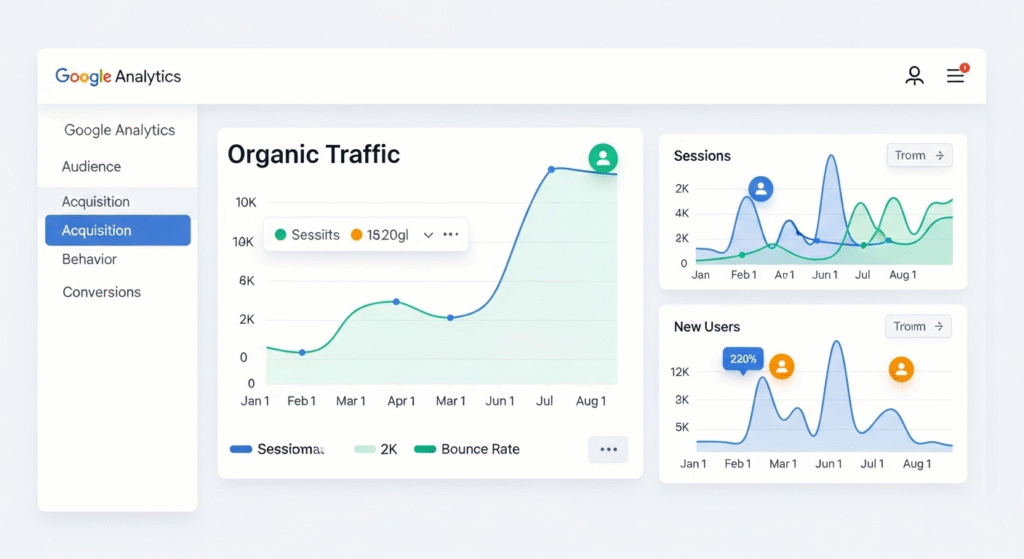
Traffic KPIs confirm whether visibility is turning into visits.
The most useful traffic metrics are:
- Organic sessions
- Organic users
- New versus returning visitors
- Organic landing pages
These are measured in Google Analytics 4.
Traffic should always be analyzed in context. A decline in total sessions doesn’t automatically mean SEO is failing. If low-intent traffic drops while high-intent pages gain users, performance may actually be improving.
Segmenting branded and non-branded traffic is critical. Branded traffic reflects brand demand. Non-branded traffic reflects SEO competitiveness.
Engagement KPIs (Does the Content Meet Expectations?)
Engagement KPIs indicate whether users find your content useful once they arrive.
Key engagement metrics include:
- Engagement rate
- Average engagement time
- Scroll depth or content interaction events
- Pages per session
Engagement acts as both a quality signal and a protective factor. Pages with strong engagement tend to maintain rankings longer, even in volatile SERPs.
In real-world analysis, weak engagement often explains ranking stagnation more accurately than backlinks or keyword density. If users leave quickly, search engines infer unmet intent.
Conversion KPIs (Is SEO Producing Real Value?)
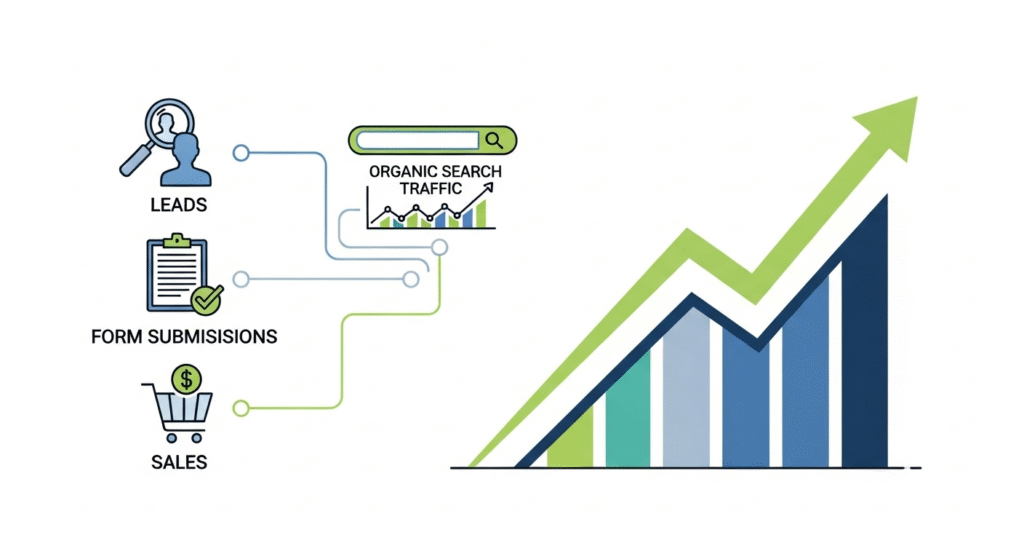
Conversion KPIs are the most important metrics for decision-makers.
These typically include:
- Form submissions from organic traffic
- Phone calls initiated from organic sessions
- Purchases attributed to organic search
- Assisted conversions involving organic traffic
SEO rarely operates as a last-click channel. Users often discover a brand through organic search, leave, and return later through another channel. That’s why assisted conversions are essential for accurate measurement.
Without conversion tracking, SEO performance discussions remain theoretical.
Authority and Technical Health KPIs (Is Growth Sustainable?)
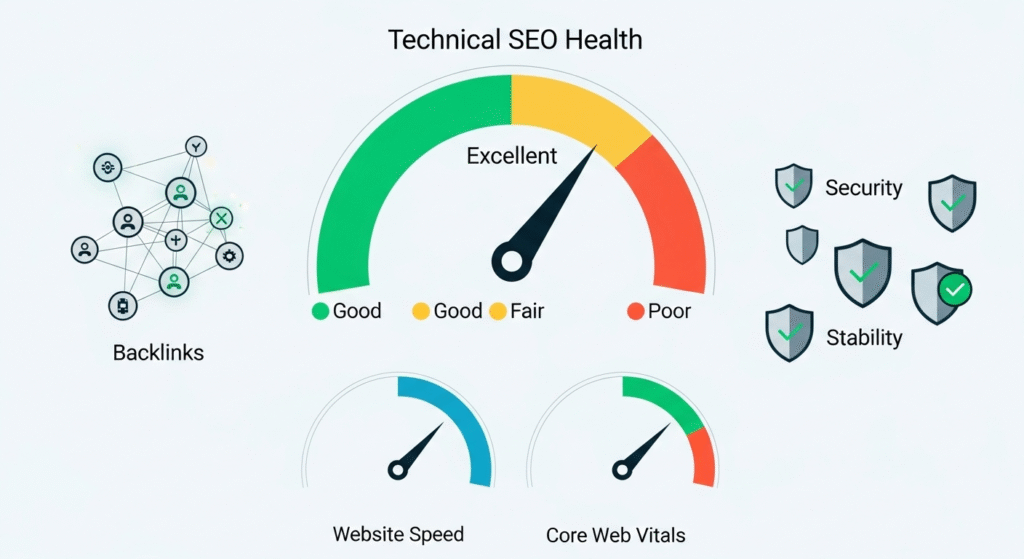
Authority and technical KPIs don’t fluctuate daily, but they determine whether SEO gains last.
Authority indicators include:
- Number and quality of referring domains
- Relevance of inbound links
- Brand mentions across the web
Technical health indicators include:
- Core Web Vitals (LCP, INP, CLS)
- Index coverage and crawl errors
- Mobile usability and page speed
When traffic or rankings decline without obvious content or competitive changes, technical issues are often the root cause.
Essential SEO KPI Overview
| Category | Metric | Why It Matters |
| Visibility | Impressions | Early signal of ranking expansion |
| Visibility | CTR | Effectiveness of SERP messaging |
| Traffic | Organic sessions | Demand capture |
| Engagement | Engagement rate | Content relevance |
| Engagement | Avg. engagement time | User satisfaction |
| Conversions | Leads or sales | ROI validation |
| Authority | Referring domains | Ranking strength |
| Technical | Core Web Vitals | UX and stability |
How Often You Should Measure SEO
SEO measurement should follow a cadence that balances insight with stability.
- Weekly checks identify anomalies or tracking errors
- Monthly reviews reveal meaningful performance changes
- Quarterly analysis supports strategy adjustments
- Annual audits uncover structural and content gaps
Daily monitoring creates false alarms and encourages reactive decisions.
Building a Practical SEO KPI Dashboard
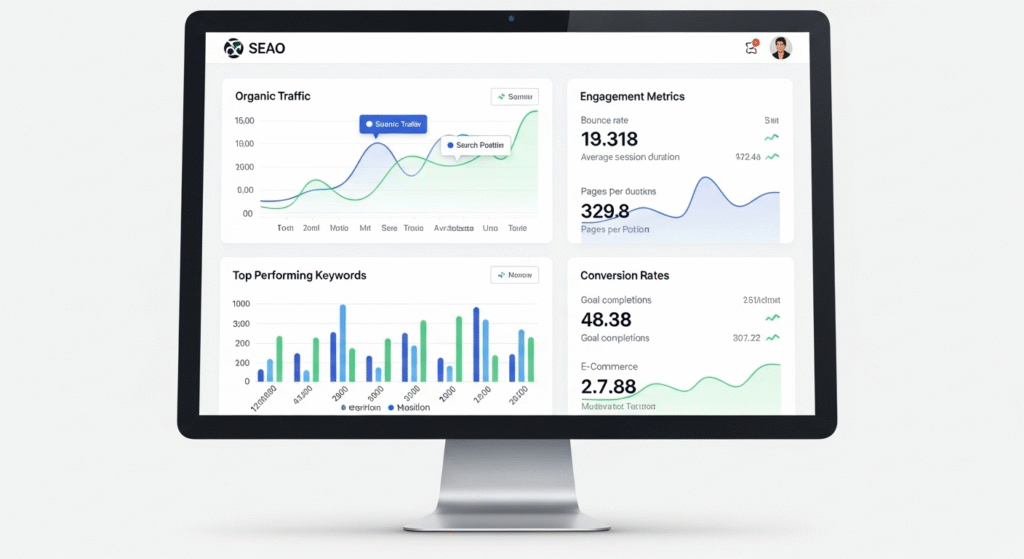
An effective dashboard doesn’t overwhelm. It explains.
At minimum, it should show:
- Visibility trends over time
- Top organic landing pages
- Engagement metrics by page
- Conversions attributed to organic traffic
- A snapshot of technical health
Equally important is commentary. Metrics without interpretation don’t drive action.
Common SEO Measurement Mistakes
- Treating rankings as primary success indicators
- Ignoring engagement data entirely
- Failing to track conversions or assisted conversions
- Comparing month-over-month instead of year-over-year
- Reporting metrics without explaining causes or next steps
These mistakes lead teams to misjudge both success and failure.
People Also Ask
What is the most important SEO KPI?
For businesses, conversions from organic search are the most important KPI. Visibility and traffic show progress, but conversions demonstrate real value.
How do I know if SEO is working?
SEO is working when impressions increase first, followed by traffic, engagement, and conversions over time. Year-over-year improvement is the most reliable signal.
Should I track keyword rankings daily?
No. Daily rank tracking produces noise. Weekly checks and monthly trend analysis provide clearer insight.
How long does SEO take to show results?
Early visibility changes often appear within 4–8 weeks. Traffic growth typically follows in 2–3 months, while meaningful conversions may take 3–6 months or longer.
Final Perspective
SEO performance measurement isn’t about watching dashboards move. It’s about understanding how visibility turns into trust and trust turns into action.
When visibility, engagement, and conversions improve together, SEO becomes predictable, defensible, and scalable rather than uncertain or reactive.