LinkedIn drives high-quality business leads when it’s treated as a long-term authority and relationship platform, not a place for random posting or aggressive selling. Business owners who succeed focus on clear positioning, experience-driven content, consistent visibility, and real conversations that compound into trust and inbound leads.
TL;DR — What Successful Business Owners Do on LinkedIn
- They turn their personal profile into a conversion asset, not a résumé
- They share real insights from experience, not generic tips
- They comment intentionally to stay visible with the right audience
- They use DMs to start conversations, not pitches
- They track conversations, calls, and revenue, not likes
Why LinkedIn Works So Well for Business Lead Generation

Most social platforms are designed around entertainment. LinkedIn is different.
When people open LinkedIn, they’re already thinking about work, growth, hiring, money, or fixing problems inside their business. That context makes LinkedIn one of the few platforms where attention naturally aligns with business decisions.
I’ve seen business owners struggle to get traction on other platforms for months, then quietly close serious clients on LinkedIn from people who never liked a post but followed along for weeks. LinkedIn rewards credibility and consistency more than charisma or virality, which makes it ideal for real businesses.
How LinkedIn Lead Generation Actually Works
LinkedIn doesn’t produce leads from one post or one message. It works through accumulation.
A prospect might see your name repeatedly over time:
- A thoughtful comment on someone else’s post
- A clear, helpful post in their feed
- A profile that immediately makes sense
Eventually, familiarity turns into trust. Trust turns into a message. And that message turns into a business conversation.
The sequence usually looks like this:
- Visibility through posts or comments
- Profile visit
- Follow or connect
- Conversation
- Call
- Opportunity
Most businesses don’t fail because they post too little. They fail because their positioning is unclear and their profile doesn’t answer the prospect’s real question: Can this person help me?
Turning a LinkedIn Profile Into a Lead-Generating Asset
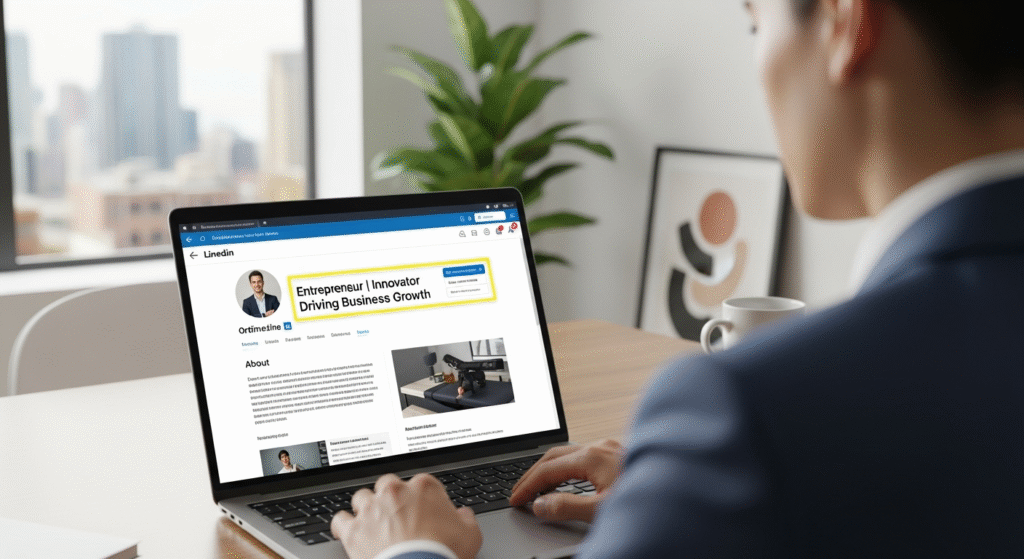
Your LinkedIn profile is the hinge point between interest and action.
Many business owners unintentionally weaken their results by focusing on credentials instead of relevance. Job titles, years of experience, and buzzwords rarely move someone to act.
What matters is clarity.
Writing a Headline That Attracts the Right Leads
A strong headline does two things at once. It attracts the right people and filters out everyone else.
Effective headlines clearly state:
- Who you work with
- What problem do you solve
- What outcome do you help create
This immediately signals relevance. When someone reads your headline and thinks, “This is exactly what I’m dealing with,” your profile has done its job.
Creating an About Section That Builds Trust
The About section should feel like a calm, confident business conversation.
Start by describing a situation your ideal client recognizes. Use their language, not marketing language. Then explain why common approaches don’t work or feel frustrating. This builds instant credibility because it shows understanding.
Next, explain how you approach the problem differently. Keep it practical and grounded. End with one clear next step—message you, book a call, or review a resource.
If a prospect feels understood, they don’t need convincing.
Using the Featured Section Correctly
The Featured section is prime attention real estate.
One common mistake is adding too many options. Multiple links and CTAs create hesitation.
Choose one clear action:
- Book a call
- View a case study
- Download a guide
Simplicity increases conversion.
What Type of LinkedIn Content Actually Drives Business Leads
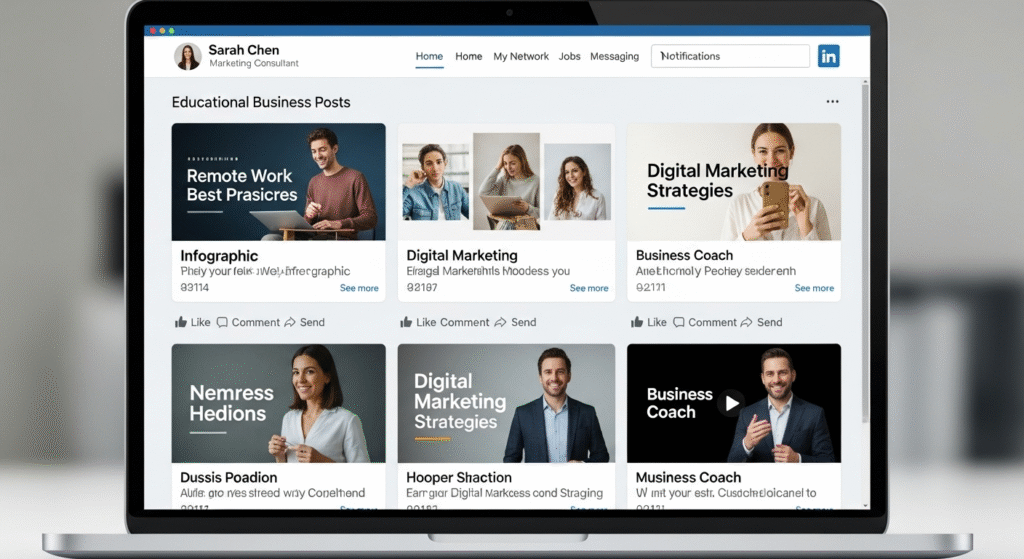
Content that generates leads rarely looks like marketing.
It looks like experience, perspective, and clarity.
Educational Content That Shows How Things Really Work
The strongest educational posts explain why something works or fails in practice.
Instead of listing surface-level tips, walk through real scenarios. Explain what most people expect to happen, what actually happens, and what to do instead. This type of content signals real-world experience, not theory.
Pattern-Based Insight Content
Patterns are powerful because they imply repetition.
Posts that begin with observations like:
- “I’ve noticed a pattern with business owners who struggle to generate leads…”
- “Every client who comes to me with this problem has one thing in common…”
These posts position you as someone who has seen the same issue many times and understands it deeply.
Experience and Lesson-Based Content
Sharing lessons from mistakes, slow growth, or unexpected outcomes builds trust faster than polished success stories.
Business owners relate to honesty. These posts feel human, and human content converts.
Soft Calls to Action That Invite Conversation
Hard selling creates resistance. Soft invitations create dialogue.
Simple lines like:
“If this sounds familiar, feel free to message me.”
They work because they respect timing and autonomy.
How Often Business Owners Should Post on LinkedIn
Consistency matters more than volume.
For most business owners, three to four quality posts per week is ideal. This keeps you visible without becoming overwhelming or unsustainable.
A realistic weekly rhythm:
- Two educational or insight-driven posts
- One experience-based post
- One engagement-oriented post
What happens after you post matters just as much as posting itself.
Why Commenting Is a Hidden Lead Generation Lever
Posting is broadcasting. Commenting is relationship-building.
Thoughtful comments place your thinking directly in front of people who already have attention. When your comment adds value instead of agreement, people click through to see who you are.
Many high-quality leads never come from posts. They come from consistent, insightful comments on the right conversations.
A simple habit works well: spend at least as much time commenting as posting.
Personal Profiles vs Company Pages for Lead Generation
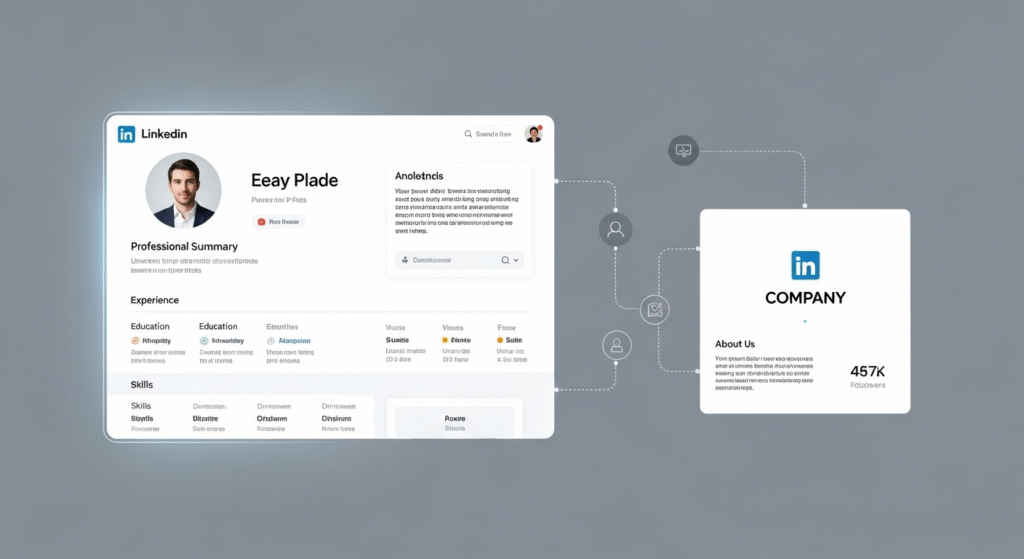
Personal profiles generate leads faster. Company pages support credibility.
People trust people. Conversations flow more naturally from a personal account, and reach is typically stronger.
Company pages still play an important role in:
- Social proof
- Brand legitimacy
- Advertising and retargeting
But if your time is limited, invest first in your personal presence.
Using LinkedIn Messages Without Losing Trust
Messages fail when they feel transactional.
Effective first messages are specific, relevant, and curious. Referencing something the other person shared and asking a genuine question opens dialogue without pressure.
The goal of the first message isn’t to sell. It’s to understand. When someone feels understood, selling becomes easier—or unnecessary.
Using LinkedIn Ads the Smart Way
LinkedIn ads work best as an amplifier, not a foundation.
If your profile and content don’t convert organically, ads won’t fix that. They’ll only make the problem more expensive.
Smart uses of ads include:
- Retargeting profile visitors
- Amplifying authority content
- Supporting lead magnets
Always track results beyond impressions using tools like Google Analytics and your CRM.
Measuring What Actually Matters on LinkedIn
Vanity metrics don’t pay bills.
What matters is:
- Are the right people viewing your profile?
- Are decision-makers connecting with you?
- Are conversations starting naturally?
- Are calls being booked?
- Is revenue being generated?
If those are moving in the right direction, your LinkedIn strategy is working—even if your posts never go viral.
Common Mistakes That Quietly Kill Results
Certain patterns consistently hold business owners back:
- Posting generic motivational content
- Pitching too early in messages
- Leaving profiles vague or outdated
- Chasing reach instead of relevance
- Giving up before momentum builds
LinkedIn rewards patience, clarity, and consistency.
A Realistic Example of LinkedIn Lead Generation

One business owner posted only twice a week. No ads. No complex funnels.
Each post addressed one clear business problem and one lesson learned from experience. Every post ended with a simple invitation to continue the conversation.
Over time, profile views increased. Messages became warmer. Calls started booking without being asked for. One thoughtful post eventually turned into a long-term client relationship.
Nothing flashy. Just trust is built in public.
Frequently Asked Questions
Is LinkedIn effective for small business owners?
Yes. It allows direct access to decision-makers without large budgets or complex systems.
How long does it take to see results?
Early engagement often appears within 30–45 days. Consistent inbound leads usually follow within 60–90 days.
Which businesses perform best on LinkedIn?
B2B services, consulting, agencies, SaaS, and professional services tend to see the strongest results.
Can LinkedIn replace cold email?
For many businesses, yes. LinkedIn conversations are warmer and more contextual.
Do paid tools like Sales Navigator matter?
They help with targeting, but clear positioning and valuable content matter more.
What This Means for Your Business
LinkedIn isn’t about hacks, trends, or going viral. It’s about visibility, clarity, and trust.
If you consistently show up with useful insight, speak to real business problems, and engage like a human being, LinkedIn becomes more than a platform. It becomes a long-term lead engine.
Not overnight. But reliably.