
Most businesses fail at SEO because they focus on keywords instead of intent, publish thin content, ignore technical issues, and never update what’s already ranking. The fix isn’t more tools, it’s a better structure, clearer answers, stronger E-E-A-T signals, and aligning content with how real people (and AI search engines) actually search.
TL;DR — The Big Problems (And Fixes)
- Chasing keywords instead of buyer intent → Map content to real questions
- Publishing once and never updating → Refresh top pages every 6–12 months
- Ignoring technical SEO → Fix Core Web Vitals and indexing first
- Writing for Google, not humans → Answer clearly, early, and conversationally
- No authority signals → Add authorship, proof, and citations
The Real Problem Nobody Likes to Admit
Here’s the thing.
Most SEO “mistakes” aren’t technical at all. They’re strategic blind spots.
I’ve reviewed hundreds of business websites, service companies, SaaS tools, local shops, and even well-funded startups, and the pattern is always the same. They’re doing something with SEO… but not the right things, in the right order, for the right reasons.
And in 2025, with AI Overviews, voice search, and zero-click results dominating the SERP, those mistakes cost more than rankings. They cost visibility, trust, and revenue.
Let’s unpack the ones that actually matter.
What Is the #1 SEO Mistake Businesses Make Today?
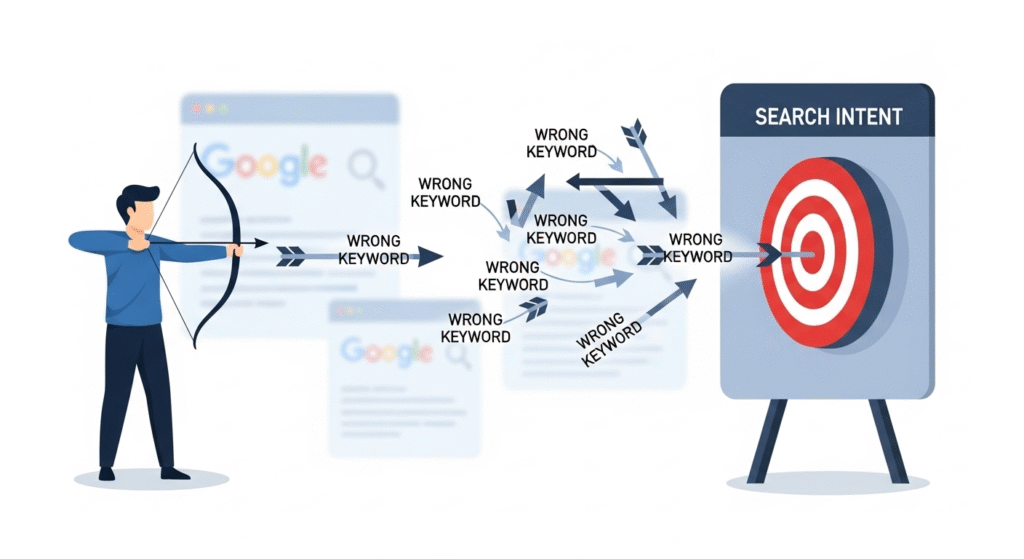
Short answer: optimizing for keywords instead of intent.
Most business owners still ask:
“What keyword should I rank for?”
The better question is:
“What problem is the searcher trying to solve right now?”
Why This Breaks SEO Performance
I’ve seen pages perfectly optimized for a keyword… and still fail. Why?
Because the page answered the wrong question.
Example:
A local service business targets “SEO services pricing” but publishes a generic sales page. The user wanted a comparison, ranges, or examples, not a pitch.
Google sees the mismatch. Engagement drops. Rankings follow.
How to Fix It
- Identify search intent (informational, commercial, transactional)
- Open every page with a clear, direct answer
- Structure content around questions, not buzzwords
- Use People-Also-Ask style H2s
This aligns with modern AEO and AI Overview eligibility.
Why “Set It and Forget It” SEO Doesn’t Work Anymore
This one surprises people.
Businesses publish a blog, it ranks… and then they never touch it again.
Six months later, traffic dips. A year later, it’s gone.
Not because it was bad, but because it’s stale.
What’s Really Happening
Google favors:
- Fresh answers
- Updated statistics
- Recently reviewed content
AI systems especially prefer current, validated information.
I’ve personally seen pages regain top-3 rankings just by:
- Updating examples
- Adding new FAQs
- Refreshing the publish date
- Improving clarity in the first 100 words
No backlinks needed.
Fix Checklist
- Audit the top 10 pages every 6 –12 months
- Expand thin sections
- Add 2–4 new internal links
- Update “Last Updated” date
This directly supports freshness and relevance signals.
How Technical SEO Quietly Kills Good Content
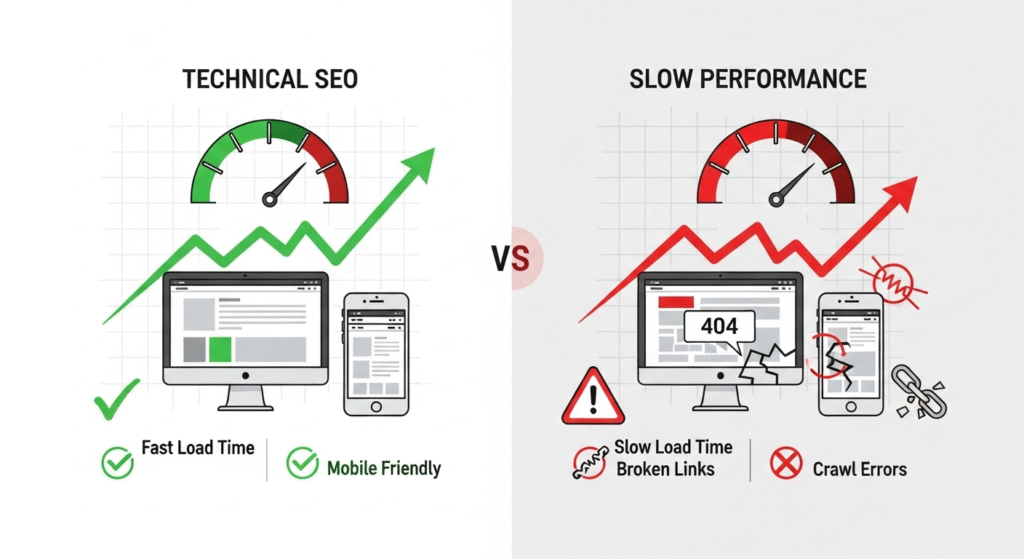
Here’s where businesses get burned.
They invest in content… while their site loads slowly, breaks on mobile, or can’t be crawled properly.
That’s like printing a great brochure and locking it in a drawer.
Common Technical SEO Mistakes
| Mistake | Why It Hurts | Fix |
| Slow load time | Users bounce | Optimize images, hosting |
| Mobile issues | 70%+ traffic is mobile | Mobile-first testing |
| Indexing errors | Pages don’t rank | GSC coverage audit |
| No schema | Missed rich results | Add Article + FAQ |
These issues directly impact Core Web Vitals and engagement.
Why Thin Content Is Still a Silent Ranking Killer
Let me be blunt.
A 600-word article that says nothing new won’t survive in 2025.
Google doesn’t need another definition.
AI doesn’t need another summary.
What wins now is depth with clarity.
What “Thin” Really Means
Thin content isn’t short.
It’s unhelpful.
I’ve seen 3,000-word posts that say less than a sharp 1,200-word guide with real examples.
How to Fix It
- Add lived experience or real scenarios
- Explain how it works in practice
- Answer follow-up questions before users ask
- Include comparisons, steps, or checklists
This is core to E-E-A-T and Helpful Content guidelines.
The SEO Authority Gap Most Businesses Ignore
Here’s the part nobody talks about enough.
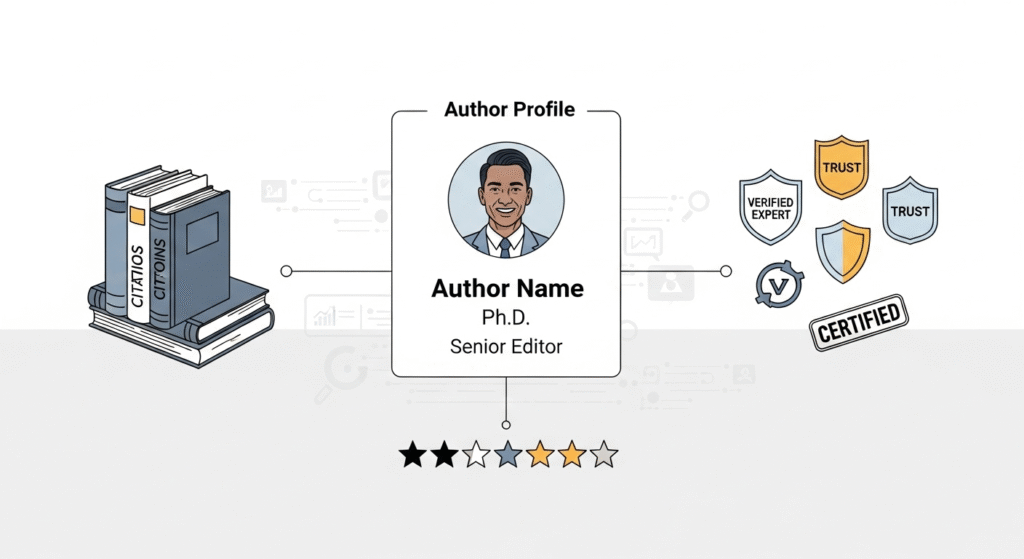
Google doesn’t just rank pages. It evaluates who is behind them.
Missing Authority Signals
- No author bio
- No credentials
- No external citations
- No real proof
For YMYL-adjacent topics, this is fatal.
Easy Fixes That Work
- Add an author with real experience
- Cite reputable sources (.gov, .edu, industry leaders)
- Show business legitimacy (About, Contact, reviews)
- Use “Reviewed by” when appropriate
Authority isn’t branding fluff; it’s a ranking signal.
The Internal Linking Mistake That Wastes Rankings
Most sites either:
- Don’t link internally at all
- Or link randomly with “click here.”
Both are problems.
Internal links tell Google what matters most.
Real-World Example
I once audited a site with 80 blog posts—none linked to the main service page.
That service page never ranked.
After strategic internal linking?
Top-5 in under 60 days.
Fix
- Link from blogs → money pages
- Use descriptive anchor text
- Create topic clusters
This distributes authority and improves crawl efficiency.
SEO Mistakes Table: Problem → Fix → Impact
| Mistake | Fix | Impact |
| Keyword obsession | Intent mapping | Higher CTR |
| No updates | Content refresh | Ranking recovery |
| Slow site | CWV optimization | Better engagement |
| No schema | FAQ + Article schema | Rich results |
| Weak authority | Author + citations | Trust + rankings |
FAQ’s
Why does my SEO traffic drop suddenly?
Traffic drops often come from algorithm updates, outdated content, technical issues, or intent mismatch. Refreshing content, checking indexing errors, and improving engagement usually restores performance within weeks.
Is SEO still worth it in 2025?
Yes, but only when done strategically. SEO now fuels AI Overviews, voice search, and brand authority, not just blue links.
How long does it take to fix SEO mistakes?
Some fixes (technical, internal links) show impact in weeks. Content and authority improvements usually take 2–4 months.
What SEO mistakes hurt local businesses the most?
Ignoring Google Business Profile optimization, weak local content, and inconsistent NAP data are the biggest killers.
What This Means for Your Business
Here’s the truth.
SEO isn’t broken.
Outdated SEO thinking is.
If your site isn’t ranking, it’s usually not because Google hates you.
It’s because your content, structure, or signals don’t match how search works now.
And the fix is almost always clearer than people expect.
Ready to Fix These SEO Mistakes?
If you’re unsure which of these issues is holding your site back, the fastest way forward is a proper SEO + AEO audit.
That’s where real growth starts.