
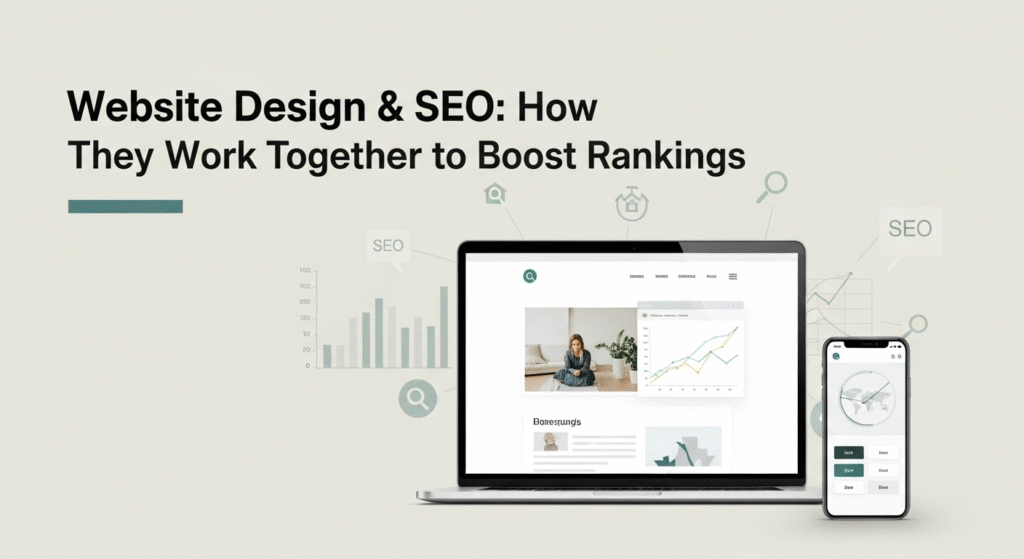
Website design and SEO work best when they’re built together, not treated as separate tasks. Design shapes how users experience your site—how fast it loads, how easy it is to navigate, and whether people trust it. SEO determines whether that experience is visible in search results. When both align, rankings improve, users stay longer, and leads grow more consistently.
Tl;Dr For Business Owners
- SEO struggles on slow, confusing, or poorly designed websites
- Design choices directly affect rankings through speed, usability, and engagement
- Google favors sites that feel easy, fast, and trustworthy
- Mobile-first design is now a ranking requirement, not a feature
- The strongest results come from planning, design, and SEO together
Why Business Owners Feel Confused About Design And SEO

This confusion usually starts with how these services are sold. Website design is often positioned as a visual upgrade, while SEO is pitched as a technical or content-based strategy. In real life, Google doesn’t separate them that way.
I’ve seen business owners launch stunning websites that looked impressive in presentations but quietly lost traffic month after month. I’ve also seen SEO-heavy sites rank briefly, only to slide because users didn’t enjoy being there. Google watches how real people behave. If users struggle, rankings eventually reflect that.
Design sets the stage. SEO brings the audience. If either one fails, the whole system underperforms.
What’s The Difference Between Website Design And SEO (And Why That Distinction Breaks Down)?
Website design focuses on how your site looks and feels; SEO focuses on how search engines find and rank it. But in practice, they overlap constantly.
Design covers:
- Layout and structure
- Navigation
- Mobile responsiveness
- Visual hierarchy
- User experience (UX)
SEO covers:
- Keywords and content
- Technical performance
- Crawlability and indexing
- Page speed
- Engagement signals
Now here’s where people get tripped up.
Google doesn’t experience your website like a robot anymore. It evaluates how humans interact with it. That means design decisions directly influence SEO outcomes.
I’ve seen rankings jump just by fixing layout confusion—no new content added.
What Website Design Really Means For SEO Today
Website design is no longer just colors, fonts, and imagery. From an SEO perspective, design controls structure, accessibility, speed, and clarity. These factors determine how easily Google can crawl your site and how users interact once they arrive.
Modern design affects SEO in practical ways. Page layouts influence how content is read. Navigation determines which pages get authority. Visual hierarchy helps search engines understand what matters most on a page. These are not aesthetic preferences. They are ranking signals in disguise.
How does website design directly impact SEO rankings?
Design affects SEO through speed, usability, engagement, mobile performance, and crawl structure.
Let me give you a real-world example.
A service business I worked with had solid content and backlinks. On paper, SEO looked fine. But users were bouncing in under 10 seconds. Why?
- The giant hero image is loading slowly
- Confusing menu
- No clear next step
Once we simplified the layout and improved load time, rankings climbed within weeks.
Here’s how design quietly controls SEO:
1. Page speed isn’t just technical, it’s design-driven
Heavy images, sliders, animations, and bloated layouts slow sites down. Google has been crystal clear through Core Web Vitals: Slow sites lose visibility.
Design choices that help SEO:
- Optimized images (WebP)
- Clean layouts (fewer elements)
- Minimal scripts
Design mistakes that hurt SEO:
- Auto-playing videos
- Overdesigned sliders
- Uncompressed images
Speed isn’t optional anymore. It’s a ranking filter.
2. User experience signals tell Google whether your site deserves to rank
Google watches:
- Bounce rate
- Time on page
- Scroll behavior
- Interaction patterns
Bad design sends bad signals.
If users land and think, “Where am I supposed to click?”—that’s a problem.
Clean design:
- Clear headings
- Logical sections
- Obvious CTAs
I’ve seen average content outrank “better” content simply because it was easier to consume.
3. Mobile-first design now determines desktop rankings too
This part surprises people.
Google primarily evaluates the mobile version of your site even for desktop searches.
If your site:
- Has tiny text
- Requires pinching/zooming
- Breaks layouts on phones
Your SEO suffers everywhere. Mobile-friendly design isn’t a bonus. It’s table stakes.
How Website Design Directly Influences Search Rankings
Design decisions shape nearly every major SEO performance metric. Speed, usability, engagement, and mobile experience are all rooted in how a site is designed.
Page speed is a clear example. Large images, heavy animations, unnecessary sliders, and bloated templates slow pages down. Even a one-second delay can increase bounce rates and reduce conversions. Google’s Core Web Vitals reinforce this by rewarding fast, stable, and responsive sites.
Usability is another factor. When visitors land on a page and immediately feel lost, they leave. Poor spacing, unclear headings, cluttered layouts, or hidden navigation confuse users. Google interprets this behavior as dissatisfaction, which weakens ranking potential over time.
Mobile design plays an even bigger role. Google evaluates your site primarily through its mobile version. If your mobile layout is cramped, slow, or hard to tap, rankings suffer across all devices. Many business sites still look acceptable on desktop but frustrating on phones. That gap alone can hold SEO back.
How SEO Should Guide Website Design Decisions

SEO isn’t something you layer on after the design is finished. It should influence layout decisions from the beginning. Site structure, page hierarchy, internal linking, and content placement all benefit from SEO input early in the process.
For example, a designer might create a visually minimal homepage with very little text. From a branding perspective, that may look clean. From an SEO perspective, it may leave Google unsure what the business actually does. When SEO informs design, visuals and content work together instead of competing for space.
Navigation is another area where SEO matters. Menus built entirely with JavaScript animations or unconventional layouts can look modern but create crawl issues. Search engines still rely on clear, accessible navigation to understand site structure and page importance.
What An Seo-Friendly Website Layout Looks Like In Practice
An SEO-friendly layout doesn’t feel technical or rigid. It feels intuitive. The page clearly communicates its topic, guides the reader naturally, and makes the next steps obvious.
A strong layout usually includes:
- One clear main headline that matches search intent
- Supporting subheadings that break content into logical sections
- Short, scannable paragraphs that are easy to read on mobile
- Internal links that help users explore related pages
- Visible calls to action that don’t interrupt the reading flow
| Page Element | SEO Benefit |
| Clear H1 headline | Confirms page topic |
| Logical H2/H3 sections | Helps Google understand depth |
| Scannable paragraphs | Improves engagement |
| Internal links | Builds topical authority |
| Visible CTAs | Increases conversions (behavior signals) |
This structure helps search engines understand content depth while making pages more usable for real people.
Why Navigation And Site Structure Quietly Control Seo Growth
Site structure determines how authority flows across your website. Pages that are buried deep in the site often struggle to rank, even if the content is strong. Clear navigation helps both users and search engines find what matters.
Well-structured sites tend to group related pages together. Service pages link to supporting content. Blog posts reference core services naturally. Important pages are never more than a few clicks away from the homepage.
When navigation is designed only for appearance, important SEO signals get diluted. When it’s designed with clarity, rankings tend to stabilize and grow.
User Experience, Conversions, And SEO Are More Connected Than Most Realize
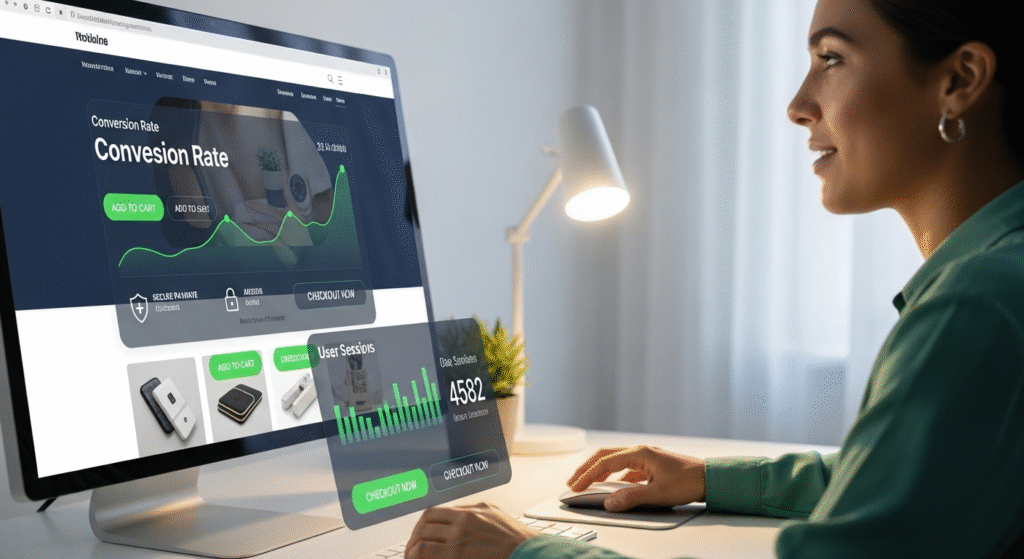
Google doesn’t track your sales directly, but it closely monitors how users interact with your site. Pages that keep visitors engaged, encourage exploration, and reduce friction send strong quality signals.
Design plays a major role here. Trust elements, spacing, readability, and visual consistency all affect whether users feel comfortable staying. Clear forms, simple layouts, and obvious next steps increase conversions while also improving engagement metrics.
I’ve seen ranking improvements follow conversion-focused design changes without any new backlinks or content additions. That’s not a coincidence.
Common Mistakes When Design And Seo Aren’t Aligned
Many SEO problems start during redesigns. URLs change without proper redirects. Internal links disappear. Load times increase. Content gets hidden behind design elements that look good but reduce clarity.
Another common issue is prioritizing visuals over performance. Large background videos, full-screen sliders, and heavy effects may impress initially, but often hurt speed and usability. These trade-offs rarely benefit rankings in the long run.
The biggest mistake is treating SEO as something to “fix later.” Once a site is built, correcting structural problems is far more expensive than doing it right upfront.
A Realistic Redesign Scenario That Business Owners Encounter
A business launches a redesigned website that feels modern and polished. For the first few weeks, everything seems fine. Then traffic drops. Leads slow. Rankings slip.
The causes are usually design-related: missing redirects, slower pages, broken internal links, or content that was removed for aesthetic reasons. SEO didn’t fail. It was disrupted.
This is why redesigns should always include SEO planning, testing, and monitoring.
How Business Owners Should Approach Design And SEO Together
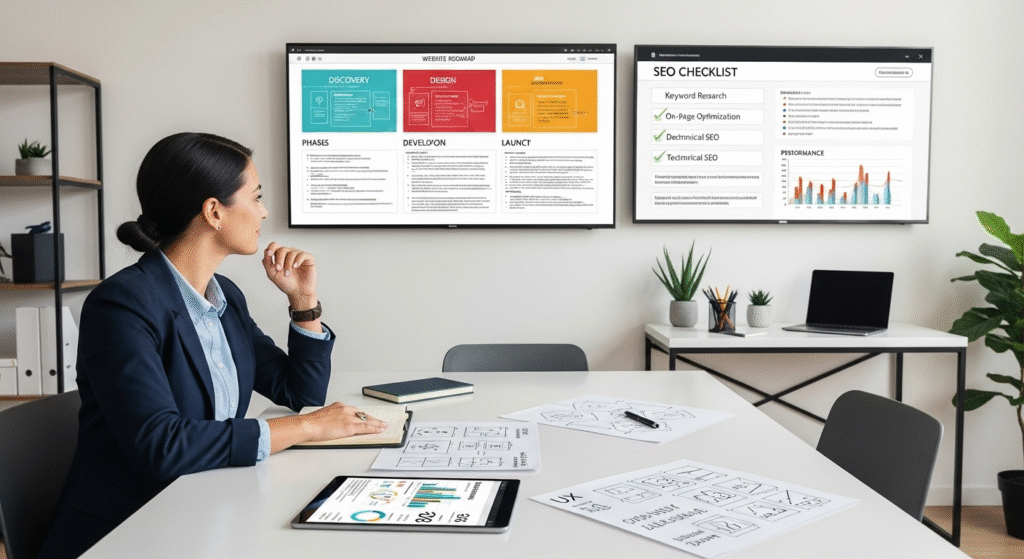
The healthiest approach is to treat your website as a long-term performance asset. Design decisions should support visibility, usability, and growth, not just appearance.
Before launching or redesigning a site, it’s worth checking:
- Is the site fast on mobile and desktop
- Is the navigation clear and crawlable
- Does each page have a clear purpose and structure
- Is the content easy to read and scan
- Are important pages linked internally
When these fundamentals are in place, SEO efforts compound instead of fighting design limitations.
Should You Hire One Expert Or Separate Specialists?
Both approaches can work, but collaboration is essential. Designers and SEO specialists need shared goals and early communication. When SEO insights guide wireframes and layouts, design choices tend to support rankings instead of undermining them.
The weakest results usually come from siloed work. The strongest results come from shared planning and ongoing optimization.
Frequently Asked Questions
Does website design really affect SEO rankings?
Yes. Design influences speed, usability, mobile experience, and engagement. These factors directly affect how Google evaluates site quality.
Can a good-looking website rank without SEO?
Rarely for competitive searches. Design alone doesn’t provide relevance or structure. SEO ensures the site can be discovered and understood.
Is SEO more important than website design?
Neither is more important on its own. SEO attracts visitors, design keeps them engaged. Rankings improve when both support each other.
Will redesigning my website improve SEO automatically?
Not automatically. Redesigns can help or hurt SEO depending on how they’re handled. Proper planning makes the difference.
Is mobile optimization really that critical?
Yes. Google uses mobile-first indexing. Poor mobile design limits rankings across all devices.
Final Thoughts For Business Owners
Here’s the part most people overlook. Google doesn’t rank websites based on how impressive they look. It ranks them based on how well they serve users.
Design tells visitors whether your business feels credible and easy to work with. SEO tells Google whether your site deserves visibility. When both move in the same direction, rankings grow more predictably and results last longer.